
Floating freedom of electricity.
“Freedom of electricity" refers to the evolving, legal, and technological empowerment of individuals, communities, and nations to generate, control, consume, and manage their own power, reducing reliance on centralized, external, or foreign providers. This concept bridges the gap between basic energy access as a human right and the technical independence provided by renewable energy sources like solar and wind.

A game-changer.
Relying on diesel generators for electricity as SIDS is not only very expensive, but you become reliant on other actors for the source of your electricity. Take charge.
Take charge.The Suntail
Made for nearshore operations
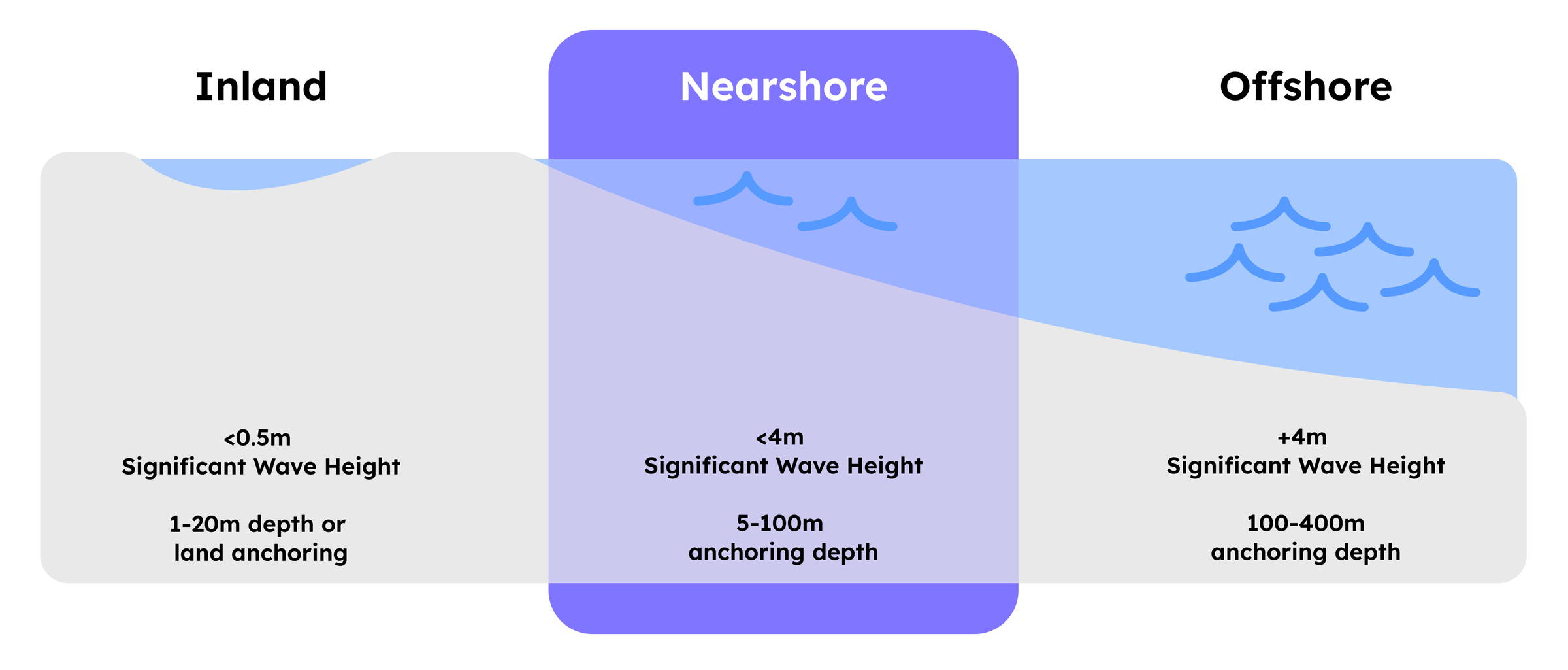
Floating solar panels are ideal for coastal and nearshore areas, taking advantage of the often shallow water depths and relatively sheltered conditions. A structure floating on water frees up valuable land—land that is often beautiful, sensitive, or expensive in coastal and island areas—while preserving the natural environment and landscape.
Offshore environments require extremely sturdy and expensive structures that are not practical to install near the coast. On the other hand, inland pontoons are designed for calm inland waters and cannot withstand the wind and waves of coastal areas. Reverlast's Suntail module is a compromise between the two and is designed for coastal areas – conditions are controllable and structures can be dimensioned cost-effectively and safely.
FEATURES
This is what electric freedom looks like.
BESS with 1:1 MWp to MWh ratio included as standard.
Deployment in remote sites with 0 supporting infrastructure
Scales to 1-50 MWp and up to 50m water depth as standard.
As a rule of thumb, LCOE on par with land-based PV in island context.
5-10x cheaper electricity compared to diesel generator
Key electrical components stay dry and protected
by up to 10cm thick glass fiber walls ensuring decades of uninterrupted power generation